
USFans Size Guide: Compare the Measurement, Not Just the Label
The useful question in a USFans size guide is not “which letter should I pick?” It is whether the specific listing, option and measurement method fit the way you intend to use the item. The same label can describe different finished dimensions across models.
Inspect a hoodie candidate on USFans and check the measurements for its selected option rather than borrowing a chart from another top.
Start with the exact item
Write down the product reference, model, colour, selected option and the date you checked the chart. A chart copied from another listing is not a substitute for the chart attached to the item you are considering. If a set contains several pieces, check whether the listing lets you choose each piece separately.
Use USFans Spreadsheet Links to preserve the source and USFans QC Photos for a later visible check. Keep a saved chart tied to the same option; changing the product or colour means restarting the comparison.
Identify the measurement type
Before comparing numbers, record the unit and the endpoints. A flat chest width, a chest circumference, a shoulder width and a garment length answer different questions. A body recommendation is also different from a finished-garment measurement.
| Field | Question to answer |
|---|---|
| Unit | Are both values in centimetres, inches or another stated unit? |
| Method | Is the item laid flat, measured around, or measured on the body? |
| Endpoints | Where does the measurement start and finish? |
| Item | Does the chart belong to this model and selected option? |
| Included pieces | Does a set contain every piece shown, and are sizes linked? |
If the chart does not define a point that changes your decision, keep that question open rather than treating the column as self-explanatory.
Compare a garment you already understand
Choose a garment that fits your intended use and measure it with the same method as the listing when that method is clear. Compare the dimensions that matter together. An outer layer may require chest, shoulder, sleeve and body length; trousers may require waist, rise and inseam or the listing’s stated equivalent.
For a hypothetical comparison, a jacket measured flat at 56 cm across the chest is 2 cm wider than a candidate listed at 54 cm using the same endpoints. That is a difference in the comparison, not a prediction of comfort or fit. Construction, shape and layering still matter.
Do not compare a flat width directly with a body circumference. If units need conversion, convert both values before comparing them and retain the original values beside the converted ones.
Keep shoes and sets separate
Footwear needs its own sizing system and model context. An insole length, foot-length recommendation and outsole measurement are not interchangeable. Confirm which system the listing uses before comparing a number.
For a set, check the included pieces and whether their options are independent. A top can match your intended dimensions while the bottom does not. Use USFans Spreadsheet Guide to keep the option decision attached to the order stage.
What QC can and cannot show
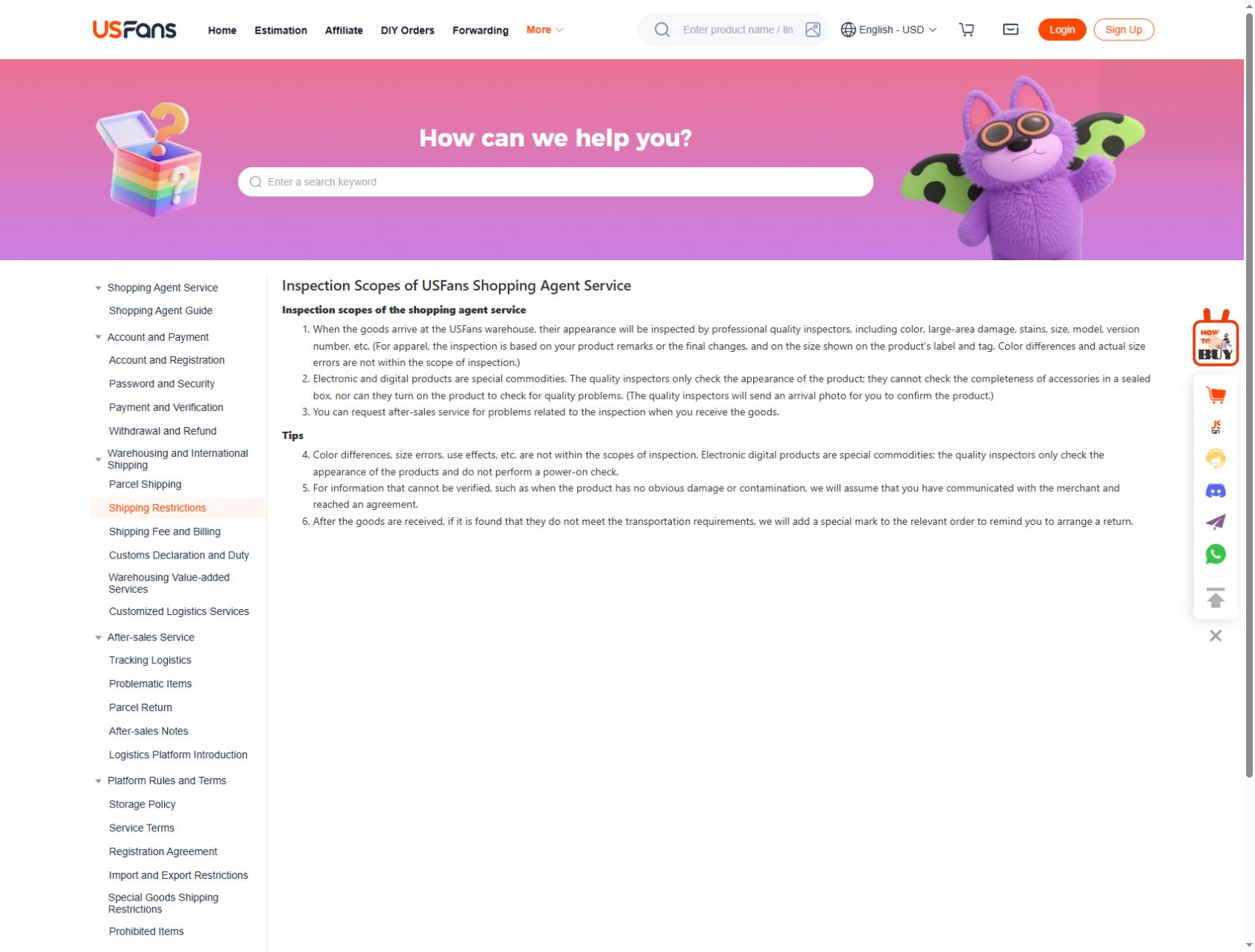
At a warehouse stage, a readable tag can help identify the labelled option. It does not establish every physical dimension. If a decision depends on a sleeve endpoint or waist measurement, check whether the available evidence actually shows that endpoint and the method used.
A blurred ruler, hidden starting point or image attached to the wrong item leaves the question unresolved. Record the item identifier and inspection date with the image. Do not turn a visible tag into a claim about comfort, material or performance.
The USFans inspection description checked on 30 September 2026 treats clothing-label size and actual dimensions separately: actual size errors and colour differences are outside its stated inspection scope. Use a label check to identify the labelled option, and specify the endpoints of any additional measurement needed to compare your hoodie candidate.
Keep the decision current
Before submitting an action, re-open the source, confirm the selected option and check whether the chart or listing changed. If you later switch products, create a new comparison rather than carrying the old chart across. The USFans Warehouse and USFans Shipping pages cover later stages; neither stage repairs an unclear size choice.
Should I always size up?
No universal choice applies. Compare the exact item’s measurements with a suitable garment and your intended use.
Are height and weight enough?
They do not describe every proportion, measurement method or fit preference. Use the listing’s stated dimensions and keep the comparison type consistent.
Does the label prove the measurement?
No. It identifies a labelled option. The measurement method and the actual dimension are separate evidence.