
USFans Shipping Calculator: Explain Why an Estimate Changes
An early USFans shipping estimate and a later parcel amount can differ because the shipment has changed. Before deciding that a calculator is inconsistent, compare the destination, contents, packaging and service behind each result. A lower number for a different parcel is not a like-for-like saving.
Use Estimation in the USFans navigation for the calculation itself. Prepare the inputs below, then compare its result with the proposal for your packed parcel. Keeping both sets of inputs explains more than comparing two totals alone.
Keep the first estimate understandable
Before calculating, identify what you plan to send and where it will go. Use the weight and dimension units requested by the actual service. Keep any postal-area input, item classification and selected service with the result.
If the goods have not been packed, distinguish assumed measurements from measured ones. That lets you explain a later change without treating the first estimate as a final charge. Product weight alone does not necessarily include packaging.
For a possible clothing selection, inspect this clothing set on USFans. Confirm what the selected option includes. The listing does not establish a packed weight, box size or delivery quote.
Compare the inputs before comparing the amounts
Put the earlier and later calculations side by side privately. Look for the change that could affect the result.
| Input | Question to ask when the estimate changes |
|---|---|
| Contents | Were items added, removed or changed to another purchase unit? |
| Destination | Is the country and required delivery-area information the same? |
| Packaging | Were dimensions measured before or after repacking? |
| Actual weight | Does the figure include the package? |
| Service | Is this the same route and charge scope? |
| Timing | Were the two estimates obtained under the same displayed conditions? |
Do not fill a missing field with another buyer's screenshot. Their receipt may explain their shipment, but it cannot establish your parcel measurements.
Understand the calculation without inventing a price
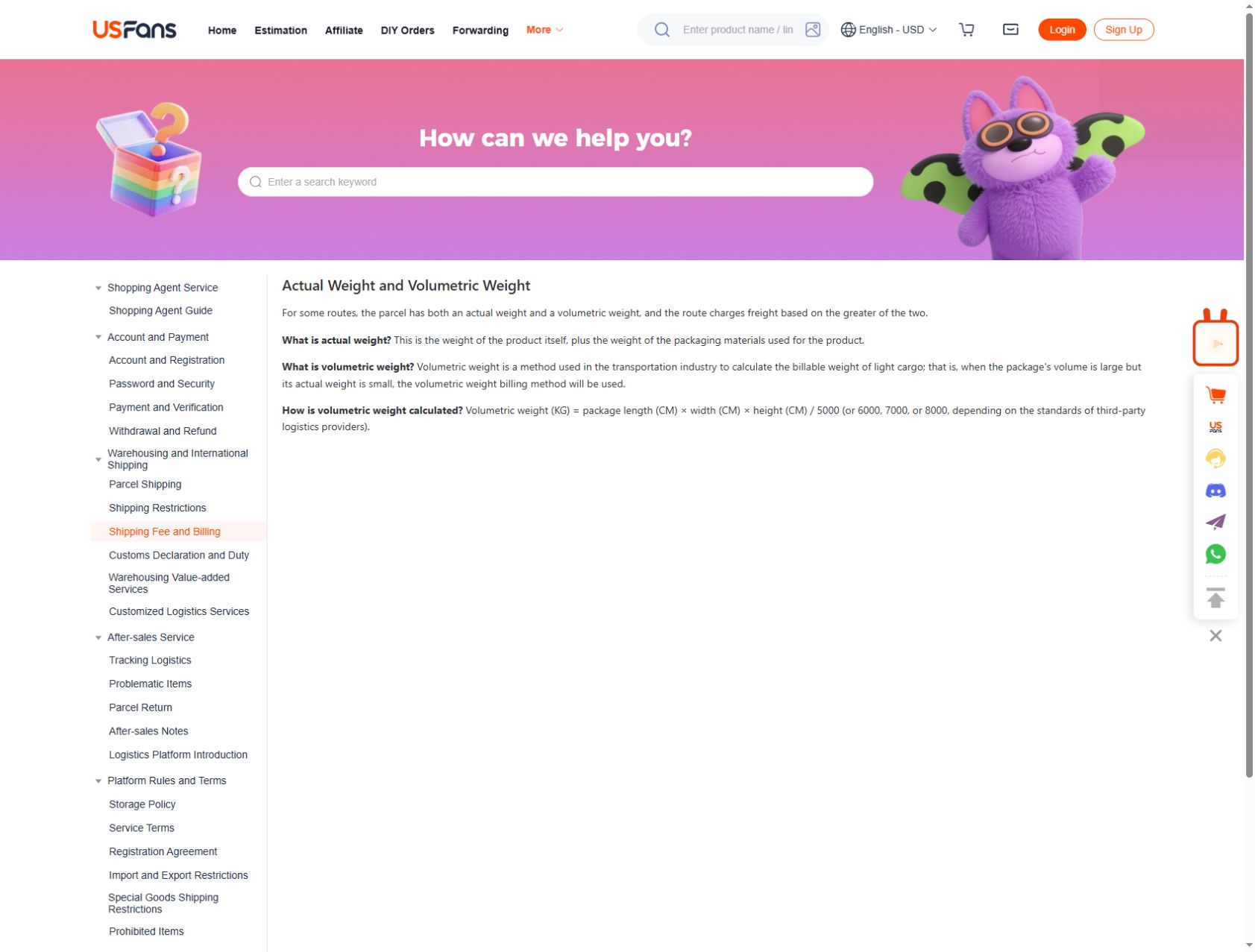
The USFans weight guide checked on 30 September 2026 says that some routes use the greater of packed actual weight and volumetric weight. Its examples of provider-dependent divisors are 5,000, 6,000, 7,000 and 8,000, using centimetres to calculate a result in kilograms. Use the divisor stated for your service, not whichever produces the lowest number.
Consider a hypothetical packaging comparison, using a divisor of 6,000 solely to illustrate the arithmetic. A box measuring 45 × 30 × 20 cm has a volume of 27,000 cubic centimetres and a volume-based figure of 4.5 kg. A smaller arrangement measuring 40 × 30 × 15 cm gives 18,000 cubic centimetres and 3 kg.
If each hypothetical arrangement weighed 3.2 kg, a rule using the larger of actual and volumetric weight would compare 4.5 kg with 3.2 kg respectively, before any applicable rounding or other rules. Neither result is a price, an available USFans service quote or a measured customer parcel.
The example also does not prove that removing packaging is appropriate. Protection, contents and actual available packing choices still matter.
Repacking is a trade-off, not an automatic saving
A smaller package can change a calculation while reducing protection or presentation you wanted to keep. Compare the actual alternatives for your contents instead of requesting the smallest box without considering the item.
Likewise, sending one combined parcel and sending several separate parcels are complete arrangements to compare. Add up the relevant proposals for all the separate parcels; the amount for just the first parcel cannot stand for the whole plan.
The warehouse guide helps you decide which items are ready. Use the shipping guide to consider route suitability, not only the numerical estimate.
Check what the displayed amount includes
Keep merchandise, domestic transport, international shipping and optional services distinguishable. Read the actual description of the quoted amount before treating it as the full cost of receiving an order.
A displayed transport interval also needs its starting point. It may not describe the time since your first purchase payment. The delivery-time guide explains why the earlier purchase and warehouse stages need separate attention.
If a field or charge is unclear, ask which input or condition produced it. Do not change an item description merely to obtain a cheaper-looking option or bypass a restriction.
Refresh at the point of commitment
Recalculate when a meaningful input changes, especially contents, destination or packaging. Before confirming a parcel payment, compare the actual proposal with what you now intend to send rather than the basket you considered several days earlier.
Retain the relevant calculation privately. Remove addresses, account information and parcel identifiers from anything you share publicly. Describe that specific discrepancy through a private support channel.
Common calculator questions
Does a smaller box guarantee a lower final price?
No. It can change a volume-based calculation, but the applicable rates, rounding, service conditions and other charges still determine the proposal.
Can I copy a divisor from a friend's parcel?
Do not assume it applies. Check the rule for your chosen service and measurements.
Is an estimate before packing useless?
No. It helps with planning when its assumptions are clear. Revisit it when more definite parcel information is available.